Wednesday, 13 November 2013

El Camino Levante - Day 3 Maqueda to Almorox

Early morning in Maqueda - by the
15th Century Juridical marker
The landscape from Maqueda to Almorox is beautiful - but it is a 12km stretch non-stop and you need to take water for the whole of this stretch.  It was a cool day and so we were not as thirsty as some might be if you do this in the spring or hotter weather and we walked it early in the morning, but do take enough with you.  It's also not quite like the 37km stretch earlier on the Levante route where there is no water and nowhere to stay nearby - so if you managed that, then this is a walk in the park!

The town was important to the Moors and the name comes from the Arabic Maqqada - meaning stable, firm or solid.  The castle dates from the last third of the 15th Century and the town used to be the capital of the Dukedom of Maqueda.  The only part left of the Moorish fortresss is the remains of the watchtower.  The church forms part of the town's defences (as does the cathedral in Ávila).  There are also Roman remains including a capital which is now a holy water stoup.    

In Maqueda just next to the juridical marker
There was some rough walking on this section - uneven rocks under grassed country tracks and deep ruts but it was absolutely beautiful with skies to match.  In some ways it reminded me of walking on top of the moors in England.  As you leave Maqueda it is not clear where you go - the guide says you leave by way of the old carretera and after 100m you turn right, but it certainly seemed further than 100m and the arrow is not clear until after you have turned.  It is not far, in fact from the main road junction which you can see ahead just before the turn.  In the photo Michael has already turned onto the track.

When reading about Maqueda the guidebook mentions (on more than one occasion) the novel called Lazarillo de Tormes.  Apparently Lazaro was given a thrashing by the parish priest of Maqueda and had to beg alms in the neighbouring villages to survive.  Curious as to what this was all about, I met with our helping friend "Wikipedia" to gain more insight.  It is a Spanish novella which was published (in 1554) anonymously because of its heretical content.  It is referred to in Don Quixote.

The obscured right turn off the old carretera out
of Maqueda.  The arrow is a little way down the track
when usually there would be one on the road or the
triangular sign on the left here...
Lázaro is a boy of humble origins from Salamanca. After his stepfather is accused of thievery, his mother asks a wily blind beggar to take Lazarillo (little Lázaro) on as his apprentice. Lázaro develops his cunning while serving the blind beggar and several other masters.


Besides its importance in the Spanish literature of the Golden AgeLazarillo de Tormes is credited with founding a literary genre, the picaresque novel, from the Spanish word pícaro, meaning "rogue" or "rascal". In novels of this type, the adventures of the pícaro expose injustice while amusing the reader. This extensive genre includes CervantesRinconete y Cortadillo, and El coloquio de los perrosHenry Fielding's Tom Jones, and Mark Twain's Adventures of Huckleberry Finn. Its influence extends to twentieth century novels, dramas, and films featuring the "anti-hero".
Lazarillo de Tormes was banned by the Spanish Crown and included in the Index of Forbidden Books of the Spanish Inquisition; this was at least in part due to the book's anti-clerical flavour. In 1573, the Crown allowed circulation of a version which omitted Chapters 4 and 5 and assorted paragraphs from other parts of the book. An unabridged version did not appear in Spain until the nineteenth century. It was the Antwerp version that circulated throughout Europe, translated into French (1560), English (1576), Dutch (after Flanders revolted against Spain in 1579), German (1617), and Italian (1622).


Lazarillo introduced the picaresque device of delineating various professions and levels of society. A young boy or young man or woman describes masters or "betters" with ingenuously presented realistic details. But Lazarillo speaks of "the blind man," "the squire," "the pardoner," presenting these characters as types.

Significantly, the only named characters are Lazarillo and his family: his mother Antoña Pérez, his father Tomé Gonzáles, and his stepfather El Zayde. The surname de Tormes comes from the river Tormes. In the narrative, Lazarillo explains that his father ran a mill on the river, where he was literally born on the river. The Tormes runs through Lazarillo's home town, Salamanca, a Castilian university city. (There is an old mill on the river, and a statue of Lazarillo and the blind man next to the Roman bridge [puente romano] in the city.)

Objections to characters not being "high-born" continued to be made in the literature of other countries for centuries. It resulted in censorship of novels by Pierre Beaumarchais, one of whose plays was used for the operatic libretto of The Marriage of Figaro by Wolfgang Amadeus Mozart. The 1767 première of the German comedy Minna von Barnhelm, by Gotthold Lessing as well as the 1830 première of the French drama Ernani, by Victor Hugo caused riots simply because these dramas featured middle-class characters, rather than nobles or religious figures.

Lazarillo is the diminutive of the Spanish name Lázaro. There are two appearances of the name Lazarus in the Bible, and not all critics agree as to which story the author was referring when he chose the name. The more well-known tale is in John 11:41-44, in which Jesus raises Lazarus from the dead. The second is in Luke 16:19-31, a parable about a beggar named Lazarus at the gate of a stingy rich man's house.

In contrast to the fancifully poetic language devoted to fantastic and supernatural events about unbelievable creatures and chivalric knights, the realistic prose of Lazarillo described suppliants purchasing indulgences from the Church, servants forced to die with their masters on the battlefield (as Lazarillo's father did), thousands of refugees wandering from town to town, poor beggars flogged away by whips because of the lack of food. The anonymous author included many popular sayings and ironically interpreted popular stories.


The author criticises many organisations and groups of persons in his book, most notably the Catholic Church and the Aristocracy.

These two organisations are clearly criticised through the different masters that Lazarillo serves. Characters such as the Cleric, the Friar, the Pardoner, the Priest and the Archbishop all have something wrong either with them as a person or with their character. The self-indulgent cleric concentrates on feeding himself, and when he does decide to give the "crumbs from his table" to Lazarillo, he says, "toma, come, triunfa, para tí es el mundo" "take, eat, triumph - the world is yours" a clear parody of a key communion statement.

In the final chapter, Lazarillo works for an Archpriest, who arranges his marriage to the Archpriest's maid. It is clear that Lazarillo's wife cheats on him with the Archpriest, and all vows of celibacy are forgotten.
In Chapter 3, Lazarillo becomes the servant of an "Escudero" or squire.  Wikipedia


The beautiful walk from Maqueda to Escalona
"The Stream"!
The guidebook tells us that around 5km along there is a stream which, when running high, might require you to remove your shoes to cross it.  I was hoping not as the autumn weather and cool morning was going to make that a rather icy experience - but I was up for the challenge if necessary.  The stream when we reached it was obvious, down a slope between reeds and although we had had some recent rain, it was not running so high that we could not jump across.  The part directly over the track was too wide to jump (although Akina loved splashing in it of course and a pigeon came down to drink as we arrived)... but through some longer grass to the left, the channel is cut a little deeper and the ground is high enough and channel narrow enough, for the pilgrim to jump over.  If there was a lot of rain however, it would require some wading and I think it possible that more than just the shoes and socks would need to be removed!

You can jump over here or there
is an even better place more to
the left with a deeper channel
and slightly higher ground
As we headed downhill into Escalona the castle ahead and the track we followed yet again made me feel like I was walking into the past - the setting was just like something from the middle ages.  Around me all I could hear was dogs barking and cocks crowing, a rough track between bushes shielded me from modern buildings and the castle ahead framed by the trees I walked between held me for a moment in a time gone by.

Arrow is on the red roofed shed on the right - some
distance from the left turn onto this track
Just before heading down this track, do beware as the arrows are not obvious and it is easy to continue straight on and end up on the main road which will then take you into Escalona.  It is possible to go this way but you will miss the most pretty decent down to the river.  A gentleman coming out of his allotment stopped me and directed me onto the track for which I was most grateful.  The arrow can then be found on a red roof of a shed.  Along the track were hunters with dogs - well looked after actually and a huge pack of all shapes, sizes and varieties including some rather tubby looking terrier types, corgis and podencos.  There must have been around 12 of them all together and they were happily trotting along with their humans.  They and Akina all ignored each other, unlike the manic chained and fenced dogs further along the track that looked quite terrifying and I hoped the fence would hold!

Escalona Castle through the trees - a very Medieval
approach
The approach to Escalona is truly impressive and one of the best on the Camino.  The others that stand out of course are Toledo and Áviala (which still lay ahead of us at this point).  The way enters across an old bridge without a walkway (so take care as it is very narrow) but there are little inlets along it to pull into - which Akina appreciated as we waited for the cars to pass before hurrying on to the next one.  We met an old gentleman who greeted us and admired Akina (she is getting very used to this now) and he was saying something about the fact that the ayuntamiento should put in a foot bridge or way or crossing for pedestrians.

Akina admires the view from
the bridge into Escalona
As we reached the other side, the very steep climb up the steps to the town walls and castle became obvious and the older gentleman took a break and sat for a while at the bottom while we dragged our tired legs up the steps.  Or at least I did - I think Akina could have trotted another 12km without batting an eye.  Michael and the other dogs were coming down to greet us and they made the perfect picture.

After the "big climb" up we followed the arrows through the narrow medieval alleyways toward the Plaza Mayor - a lovely open space with a veg market - even on this Sunday!  Next to this was a fabulous "churreria" where we had a tasty tostada, a coffee and some hot chocolate with fresh churros!  Yum.  Well deserved I'd say!  The lady was wonderful, as being a Sunday the ayuntamiento was shut and she did not have a stamp, she called the local police and arranged for me to go and get a stamp there.  I trotted off to the station and after a few moments hunting for the bell, a young policeman came out and pointed to where I could get in.  He was keen to speak English and was a huge fan of Liverpool Football Team and told me he had spent holidays in Liverpool and London and was going again.  I chatted a bit in Spanish and him in English and what wonderful, friendly and helpful policemen - pretty much as I have experienced in every encounter with the police here.  He wished me a Buen Camino and I headed off to the cafe to finish another coffee and then stock up with fruit in the market before heading off toward our overnight stop in Almorox.


A "welcome" sight - the welcoming committee!

The Sunday market and sign to
the churreria!
The wonderful churreria itself!  Do visit!
The way heads across the Plaza Mayor and out through St Michael's Gate, turns right and heads out of the town and down a rough track to the river where the ayuntamiento has built a new bridge for Pilgrims over the busy ringroad and then an old Roman Bridge over the currently dry river bed.  Sadly you can only see its "Roman-ness" from the side as the top has modern concrete bollards and tar over it.  A lady accompanied us down the street - taking my shell in her hands and asking me where I had started and and asking me if I was going through the campo or on the road.  I said that I walk on the track and Michael takes the dogs in the car.  She wished me well and went on to her house.  Before leaving Escalona a few Spanish riders and their beautiful horses made their way out onto the street - it always amazes me how calm everyone is about horses on the street - in other countries (or UK in particular) the drivers get very annoyed about horses "in the town" and here they even turn up with them and have a drink at a bar in town.  The horses consequently are usually so chilled about everything.
Puerte de San Miguel
the exit gate from Escalona

The track is then one hellish rough and rocky climb up onto the plateau that leads to Almorox.  It was tiring and only reminded me of the hill climbs to come (!)  There were also an abundance of scrambler bikes who were a tad surprised to see us on the track - but the lead rider slowed and signaled to the others that there were other "users" of the track ahead.

The "Roman bridge" below Escalona and before the
rocky pathed climb!
Once at the top the plateau was fairly flat going and it had turned into warm day.  I got through a lot of water and we hit a tar road which is always less fun to walk on and far more tiring than walking on rough tracks!  The feet ache in a whole different way.  For most of the distance - some 5 or more kilometres, there was a huge stud.  The horses here were living in herds, sometimes mixed and with hundreds of hectares in which to behave as a "wild" herd.  I came across this elsewhere with stallions running the mares too and it is lovely to observe them.  They were truly magnificent Spanish horses too.  I tired a lot on this next part of the journey, for some reason today seemed to drag on and the kilometres just seemed longer!  By the time I entered Almorox (I dropped off my rucksack and the dogs just before the town and the tarred road) I was desperate for the day to finish and could not wait to get to the accommodation to shower and sleep for a while.  I reached a bench next to a bus stop and sat down to wait for the support vehicle, I could have slept right there.  A bus started to pull in and the driver signaling to me - was I waiting for the bus.  I raised a heavy hand and summoned a smile to say "no" and he drove on.

The view from my balcony in Hostal San Jose
When the car arrived I was very grateful for some wonderful nectarines and cold bottle of water - and as so often with these things, as soon as I had a little sustenance and we were driving, I started to recover and feel more myself.  I won't deny being glad that I did not have another 5km to walk though!  The accommodation in Almorox (suggested in the guidebook) is easy to find and at the beginning of the town, but it was actually quite expensive.  We had located a place just over 8km from Almorox at Hostal San Jose (Cadalso de los Vidrios) and on arrival found we had a huge room with a bath and balcony.  It was 25 Euros and for an extra 5 Euros the wonderful lady who ran it allowed Michael to use the facilities and bathroom.  Perfect!  We both had the chance for a glorious soak - well after the 2 hours it took to fill the bath a couple of inches!  OK - I exaggerate, but it must have been the slowest filling bath in the Universe!  However, it was well worth the wait and with a lovely sunny balcony overlooking the trees in the valley, I could hang out my day's washing and let the rays warm me as I dozed at the end of the tough day's walking.  The hostal is huge and in the summer it would be a great place for families to stay as it has a huge pool and play area.    For an affordable stay in a lovely area check it out on Booking.com.  Adding to the delight during our visit was an adorable and cheeky puppy learning to greet everyone who passed by.  The friendly welcome was much appreciated after the long day - and memorable along with the other wonderful welcomes we received on this part of the journey up to and including Ávila.  Sadly, we had a couple or less welcoming experiences (our first on the whole Levante route so far) after Ávila - but that's for another day.

It was in Cadalso de los Vidrios that we had an unexpectedly good meal.  It's always the way, you aren't expecting anything, it's a small town and not busy.  You are recommended a place to eat and you will take anything as you are hungry, tired and just want sustenance before bed.  The bar looks average and then you get served the most delicious and delicately cooked meal!  I'm not into veal, but Michael had the thinnest and tenderest of veal steaks cooked to perfection - and he's been looking for the same standard ever since of course.  This will turn into another "perfect crème brûlée" hunt - sorry readers - an in-house joke!  Sadly I can't even remember the restaurant, but if you stay at the San Jose, the lady there is bound to recommend it!  This same wonderful lady also had a private and quiet parking area at the back of the hotel (just under my balcony) and allowed us to park there and use it as our camping area with the dogs.  Perfect!  It also meant that in the morning, with our drive back to Almorox, we would leave in good time as Michael did not have to drive back to pick me up.  Having located the start of the next day's route, we were all set... but mentally, I had no idea what lay ahead.  It was to be my hardest day on the Camino, and not at the expected point either!

Tuesday, 12 November 2013

El Camino Levante - Day 2 Rielves to Maqueda

Today's walk was 22.1km and for the most part we were on a roll.  We just had a bit of a stressy end to the day... but more on that shortly!

Akina showing off her true colours!
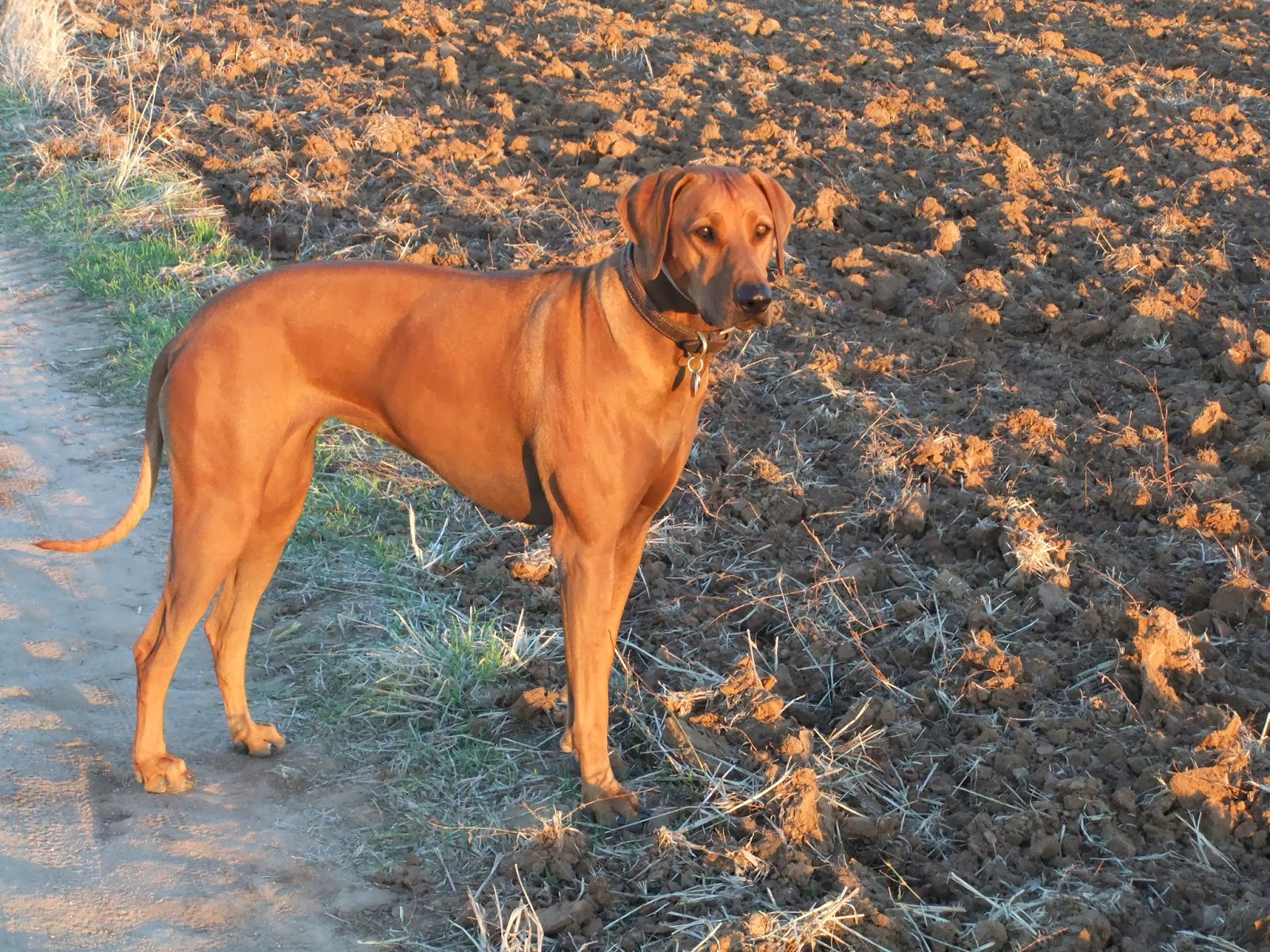
As it was a fiesta day (Hispanic Day) we were expecting everything to be shut.  We had ordered bocadillos the night before at the restaurant and were armed with snacks "just in case".  We drove back to Rielves to get started and I headed toward the rather amusingly names "Barcience".  Appropriately, all the bars were open (!) and as Michael said, it's as it should be in such a named village!  The crisp morning air was perfect for walking and the sky clear and bright as we approached this wonderfully named place with a castle perched up on the hill above it.  The colours were perfect for enhancing Akina's copper red coat and she positively glowed in the morning light.  When I look at her magnificence I am always in awe - her power and beauty are stunning and I simply can not take my eyes off her.

Castle above Barcience built in the 15th century
by the counts of Cifuentes,
whose emblem was the lion.
and used for artillery in the 16th century.
As we entered the town next to a church with .....  there were trails drawn across the clear skies from all the aeroplanes leaving Madrid first thing.  It was quite a sight to see and shows just how busy the airways are!

flight paths
We left Barcience we followed the arrows through and out of the town, where there was a rather nice marker right in the middle of a round a bout until we came to a whole new housing estate complex, all laid out but no houses of course due to the market collapse.  Here there was an arrow on the curb or another round a bout, but it seemed to indicate going straight across it and taking one of the tracks that looked likely, right ahead and through the ghost estate.  As we walked down it, I could see another track heading out into the country with various walkers on it.  I peered over to one of the street lamps and could faintly see what looked like an arrow.  I took a cross street in the "invisible" estate and met with the right track, now clearly marked with arrows.  At the round a bout, it will mean going (as if you were driving) right around it and taking the last exit before you headed back the way you came.  There are no arrows at this point, but it will save you potentially going out of your way.

The church as you enter Barcience
The church in Torrijos
At this very same round a bout we suddenly came upon a man with a retriever and another big dog on long leashes.  They were lunging and barking and he was hauling them in to keep control.  Again I was left admiring how far Akina has come since her fearful puppy and teenage days and how much trust she has developed - she did not raise a hair and totally ignored them, just tuning into me, accepting her treat and moving on.  This is obviously an area for dog walkers and also for the interesting art of dogs working alongside or pulling a scooter - the kind that you push with your foot - as here we met a man with a galgo doing just that!  It got me thinking of bike joring, ski joring, cani cross and my own private venture of getting the sulky going - all sports where dogs pull humans.  Pulling a scooter is another - but I can't remember what that is called.


Cressa joins us at the cafe with THE most delicious
coffee and fresh doughnuts!  Head along the camino from
the church and call in - it's the first cafe on your right!
We headed on out for Torrijos and our dog swap point.  I was in hope of coffee and a nice morning break in the sunshine.  As we entered the town more bars were opening, everyone was dressed up and headed for church and the priest himself was making his way to the doors under the tower as the bells started to chime.  Akina and I waited on a bench as the bells rang out (above clip) until Michael arrived and then she got in the car for a drink and to put her feet up while we took Cressa to a little bar along from the church and what a find that was!  Delicious!!  We had wonderful coffee and chocolate coated fresh doughnuts - along with some "freebe" kind of doughnut holes filled with a creme anglais.  Mmmmm - just what we had wanted and at a little sunny table outside the cafe.  The tapas inside looked so inviting, we were almost tempted to just while away the morning and wait for lunch to arrive - but that wasn't going to get the Camino walked!

Ayuntamiento - Palace of King Pedro I

Torrijos was possibly originally a celtic settlement.  It's main foundation is Roman with the name Torrijos coming from the Latin word "turris".  Of the Roman remains are the aqueduct, various bits of roadway, burials and coins.  It also experienced the Visigoths (who called it "the Fates") and the Arabs (then having the place names of) "Cerro de la Atalaya or Mora Encantada", "Valdeolí" or "Valley of Ali" and "Almendraba" or "Medrano.


The Ayuntamiento building is the old palace of King Pedro I and it was the residence of the kings of Castile after the erection of the fortress-palace by Alfonso XI in commemoration of the victory against the benimerines Salado (1340) - info from the Ayuntamiento but I can't vouch for the translation page!  The town had two synagogues, a mosque and a Gothic-Mudejar temple under the patronage of the town's patron saint, San Gil Abad, sadly now none of which exist.  Juan II resided frequently in the so-called Palace of Pedro I and enlisted the help of Torrijos in their struggles against rebellious nobles and the city of Toledo.

The Barcience round a bout
The town was walled until the late nineteenth (originally constructed in the 15th Century and no longer in existence) and accessed through the main gates of: "Arc of Toledo", "Maqueda Gate", "Puerta del Pozo", "Puerta de Madrid" and "Gerindote Gate".  It's economy was developed in the 14th Century and based on the production of oils, soaps and other rich regional trades.

The mountains ahead that we were due to cross in
a few days
Heading out of Torrijos I took Cressa for a way and she trotted alongside me as we followed the tar road out of town.  She was great with the traffic and walked so nicely on the leash - I videoed her for Facebook to show potential adopters how nicely she does it.  I really hope she finds a lovely new home - she deserves it as she has changed so much already and the Camino will really make her into a new, braver, well travelled and more confident dog.  I collected Kaishi at the dog swap point and headed out along a rough gravel track next to the main road.  Pretty but always a shame to be near such a main highway.  I also had to keep her on leash as there were plenty of rabbits and all too near to the road.  She was superbly good though and did not pull on the leash once or even glance much askance as they darted hither and thither in temptation!  The arrow takes some looking for as there is a new fenced area where originally you would join the Camino, but just off the round a bout outside Torrijos the fence ends and you can see the track on the other side of it - the arrows are there, you just have to look for them.  Originally the path took pilgrims a little more toward the highway and then onto the track.  

Kaishi in her favourite rest
position taking an afternoon nap
over lunch!
Me enjoying my bocadillo in the
sunshine on a perfect sunny day
with great views (by the way that
cheese is blow your socks off stuff!)
We soon entered Val de Santo Domingo, a sleepy little town with little going on and were through it in the blink of an eye.  What stood out the most was the fact that in the distance, beyond the town, we could see the mountains rising before us, the ranges that we were due to cross in a few days and the ones we had been getting every closer to in nervous anticipation!  Psychologically this was what I had been doing the most preparation for and they were now only a few days away.  From here we climbed a gently sloping road up onto downland and looked at the last of the flat lands before we would start our slow upward decent into the foothills.  It was so beautiful and so sunny and it was just about lunchtime so we decided to take a little break to rest up and admire the view while we had lunch.  We were making good time and could spare ourselves time to chill.

Route change info - Pilgrims take note of the following:

Kaishi next to the last marker we saw before having to call
the support vehicle - GR marker.  After this all arrows
and red and white GR markers disappeared
When we set off again we were heading into Maqueda and here is where we hit our frustration for the day.  Just before the N-403 the map shows the route clearly going to the right.  The instructions in the guide book says that ahead is the carretera and that there are tracks barred to traffic right and left, but take the one to the right and cross the barrier.  It then says that at the next intersection go left until you have an olive grove on your right.  There is more but I never found that as we were completely lost trying to follow the map first and then the guidebook.  Going right according to the map takes you beyond where there should be another track left and toward Maqueda - it no longer exists.  We back tracked and the only option at the barrier is to now actually follow the carretera all the way into town.  In fact the arrows direct you so - as we noticed once we were driving.  As we were so close to where we would meet the car and where we should have been able to give Kaishi a drink at a stream I had not worried about the fact that she had not wanted a drink at our last stopping point.  However, as the heat was building up and we were wandering about lost and with little shade, I started to worry about her as she was lying down at every opportunity.  I found some shade in damp grass and laid her down while I rang for the support vehicle.  My own water was now out and so I could not even help her with that - we were "so" close to where we should be but just could not get through.  The support vehicle was not going to be able to meet us at our planned location because the track that should be in front of us was just not there.  Michael was on the other side trying to reach us with water and we were trying to reach him.  We were almost in shouting distance but as the saying goes - close but not cigar.  The only choice was to back track.

The dogs also like to have an afternoon nap after a day's
walking!
Fortunately the support vehicle could get to the track we had been on before this confusion and there was a break in the barrier where the car could turn off the main carretera.  We cooled Kaishi off, gave her a little to drink in small sips so she did not bolt it and make herself sick and headed off into Maqueda.  We wanted to find a restaurant for that night - there is nowhere to stay particularly in the town so we were booked into a lovely little place in Quismondo.  Clean, tidy, warm and with great showers and for that night well worth the 25 Euros.  If you want to plan it to walk on from Maqueda and stay here I would thoroughly recommend it and it is really a stone's throw off the Camino.
 

Hotel Euroquismondo
Carretera de Extremadura, Km 67.200
Quismondo, Toledo
925 79 06 63  

The "new" route - continues straight and
then heads along the carretera into
Maqueda
After showering and having a nap we met to head back to Maqueda to a little roadside cafe where we actually had the most delicious lentils!  It was hearty and warming and just what was needed as the chill of the night set in and tiredness from the day.  It's interesting how no matter how hot it is, after walking for the whole day - usually between 6 and 8 hours - you get very cold.  I'm always ready to curl up in bed to keep warm and sleep for a few hours until supper time.

As supper time is so late in Spain and we are usually finished around 14.00 hrs, after a shower and getting sorted out I'm usually tucked up around 15.00 and sleep until 20.00.  I try to write some notes for the day and read a little if I can, but sometimes the day just demands sleep and the chance to warm up.  Michael found the perfect little olive grove that night where the dogs could play a little and took the most wonderful photograph of them all at supper time.

The dogs dinner time at the olive grove camping ground
outside of Maqueda

Monday, 11 November 2013

El Camino Levante - Route Changes "beware"... and Day 1 Rielves

On the road...
One of the reasons for making this blog detailed in places about the route, is in order to help others who choose to take the Levante route, avoid the mistakes and frustrations of certain changes that have taken place and which are neither written in the current route guide or marked on the maps provided.  I have photographed the maps, marked as best I can with the actual route and I have made notes about options - I have then included these in the blogs.  In this way, pilgrims have the choice of where they walk (in one particular instance) and can avoid going out of their way on a few others.  There are quite a number of changes to this part of the Camino - more than I have encountered at any other time on the Levante Route so far.

There is also a "very" significant amount of tar road as you complete the last stage toward Zamora and into Zamora itself.  I have made notes of these changes (which I will add at the relevant stage of the walk) in the blogs that follow.  For anyone considering walking the Levante route I would suggest reading through the blogs relating to Rielves to Zamora in order to check out the information but the areas to watch out for are the following:
  • Around Barcience
  • After Vl de Santo Domingo near Maqueda
  • Shortly before entering Escalona
  • Around San Martín de Valdeiglesias
  • From Cebreros to San Bartolmé de Pinares
  • Outside of Ávila on the way to Narrillos
  • Around and before Cardeñosa
  • A HUGE change and the chance of a lot of confusion leaving Arévalo
  • No municipal accommodation at the convent in Nava del Rey
  • Before Siete Iglesias de Trabancos
  • Leaving Castronuño
  • After Villalazán and heading into Zamora
As you can see - there are quite a few "problem" areas!!

Day 1 - 10km to Rielves:

However, on arrival at our start point - 10km before Rielves - all the above "trouble spots" were unknown and lay ahead of us, yet to be encountered and dealt with!  

Traveling with us up to Rielves was Cressa, a foster dog who had only been with us for a few weeks.  She had previously been a little car sick, mostly through stress, and was not used to the routine of driving somewhere for walks.  We had been doing some preparation with her, driving out to do fun things and coming home, teaching her not to just jump in and/or out of the car without sitting and waiting first and how to wait for her food and eat in very close proximity to the other dogs, but this was her first big test.  I have to say that she passed with flying colours.  Although a very submissive dog (overly so) we knew from experience that taking a rescue dog on a trip like this, with our "seasoned campaigners" would do her the world of good and change her for the better.  She would grow in confidence and learn that the car is a great place to be and means fabulous walks.  She would also learn to be patient, wait in the car as though it is a big mobile kennel, relax there, sleep there and have the chance to learn how to be a great companion on journeys - including learning how to stay in pet friendly hotels.

Comfort break for both dogs and humans!
We were so happy with Cressa - we stopped regularly as we usually do to let the dogs stretch their legs and "powder their noses" (!) and she did not have any accidents or get sick.  It took us just over 4 hours with breaks, to get to our starting point and the day was sunny and glorious.  I decided as I had not done any practice with my pack prior to leaving (I had just been walking the hills and long dog walks along with the 6.5km lake hike) that I would not carry it on the first 10km and would build up the distance I carried it over the next few days.  Despite the walking preparation and wearing in my new walking shoes over the two weeks before leaving, the first 8km were a bit of a shock to the system!  Part of it was the terrain (uneven small round stones and sand) and part of it was the fact that I was dressed for 9℃ Alhama weather and it was 22℃.  We have uneven rough roads, but the round pebbles were not easy going and the sand - as everyone has experienced on the beach - is a bit two steps forward and one back!  By around 5km I felt like I had done 15!  It did not bode well for the next 270km!!  The wind was quite strong and my face was soon feeling the effects of wind burn.  The dogs slipped into the routine easily and were full of the joy of the walk.  However, the human member of the team was feeling nervous about the coming days and after all the anticipation, planning and expectations, I was worried I had underestimated how difficult this was going to be.  While all this worrying was going on, Cressa ran non-stop for the first 6km!  I had to admire her and by focusing on the dogs it helped me keep putting one foot in front of the other.  

First Camino Markers of our
walk into Rielves
Ndzilo saves the day
When I hit the 8km mark though something interesting started to happen and there was an ease to the muscles that were feeling stiff and tired and the spring came back into my step.  I had the "most" delicious apple ever (have you noticed that when everything seems a bit black and you are tired and hungry that the food you eat is always so much tastier?) and I was able to pick up my enthusiasm again.  On top of this, Ndzilo had now joined me and was moving along in her easy going swinging trot that everyone who knows her loves and regards as a distinguishing feature!  I could not let the old girl get the better of me!  After all, she is the equivalent of 84 if we buy into the dog/human years maths!  Thanks to Ndzilo, she kept me in the moment and made sure that I did not feel overwhelmed by the enormity of the task ahead.  She can go all day at that pace  (!) and I would never keep up with her, but she kept coming back to check on me and she, along with the pretty landscape alongside the river which we met every so often, we made it into Rielves and our first 10km could be subtracted from our total.


Unpacked for the first night on this section of the Camino
in Bar El Abuelo
Rielves is small but very pretty and with some magnificent houses on the route by which we entered!  Lost were very new and being lived it and the whole place did not look much effected by the "crisis".  Everything was neat and tidy and very "suburban" and not at all what I would have expected of such a small Spanish village.  We had not seen a car in all our 10km - just one tractor making its way along the side of the river.  The town too was quiet and I met the support vehicle and dropped off the dogs before continuing into the town centre and the arriving at the point where tomorrow's walk will start.  

Drying clothes on the balcony
There isn't really anywhere to stay in Rielves so we planned to head out to Torrijos where I would walk through tomorrow and stay at one of the recommended accommodations.  Bar El Abuelo.  Before checking in we had a celebratory glass of ice cold beer to mark the first day on this Camino trip.  I then paid my  €15 for the night - a room with three beds - and a little balcony where I could hang out my first day's washing.  Michael went off with the dogs to find a camping spot and I tried out the suggestion I read about on one of the Camino sites - to shower while stomping around on your dirty clothes.  Add some travel wash to the wet clothes and while showering and adding on more shampoo and gel from the shower, shuffle around on the clothes.  As you rinse off, so do the clothes.  Wring them out and hang them up - with the lightweight walking clothing it was pretty much dry by the next day on most occasions.  Sometimes  clothes can then be pegged to the outside of the rucksack to finish drying in the breeze as you walk, and for me I mostly had the luxury of being able to dry them on the warm dashboard of the car or hang them from the string curtain rail we had put up behind the front seats to make privacy in the sleeping area of the car.  A perfect indoor washing line! 

We found a local bar in Torrijos for a menu del dia and enjoyed another celebration with a lovely glass of white wine.  Perfect!  Then, tucked up for the night - Michael trying out his new camping bed and bedroom and me waiting for the three bears to show up (haha!)
  

Sunday, 10 November 2013

El Camino de Santiago - Levante Route: 18 days from Rielves to Zamora

The spare room with all the pre-Camino equipment
and prep
It's hard to believe that just over a year ago I was doing my first practice walks and by November was well on my way to my target destination of Toledo.  As I hung out the laundry one day during the month before starting out on the next stage of my Camino, the weather was perfect Camino walking weather and I was glad that I had chosen October to walk.  Although still in September, the everything about that morning was a perfect reminder of everything I love about October hiking.

It is my favourite walking month.  Generally the days are like the one I mention here - the sun is warm, but not too hot, the autumn has taken the intensity out of its rays and the breeze has a

cooling edge to it.  The damp of the early
mornings brings the scent of the hay that is being collected off the fields and the light is of that perfect golden quality that enhances everything it touches.  While I pegged clothes to the line that day it filled me with longing to get started again - it was a day for walking, yet we were still a month away from leaving.


Bed ready to use!
For then, the task was preparing everything we needed for the walk, not just for ourselves including the ability to "camp out" in the car and to cater and accommodate three dogs.  I also had the task of booking all the accommodation in advance, at least as far as Ávila and further if possible.   Most of the suggested accommodation does not have a website and it requires phone calls to make reservations.  I realised during this process how far my Spanish had come in the twelve months since I last battled my way through booking by phone!  Now I could actually hold a conversation with people where they wanted to chat (mostly although occasionally an accent would have me totally lost) and I could generally answer their questions.  Mostly I had chosen where I wanted to stay in advance (on my return last year) which made the booking process a little smoother.  I knew where I planned to finish each day and had planned for a two day break in a couple of places of historic interest both to look around and to have a bit of a rest.  I also built in a couple of extra days in case I (or the dogs) needed to rest up for any reason.  With everything prepared, the week before I was due to leave I had "vertigo"...?!

Dog bed and living area separated off from human
bed.  Their food and water, our extra luggage was
placed at the foot of the bed, under seats and
in storage spaces.  There is also a roof rack for use.

Yes, you read that right - vertigo!  I thought initially I had got the translation wrong when the Spanish doctor told me (I was feeling so terrible I actually had a house call!) - but it was from having worked with a strong dog the week before and related to a twisting movement that I had been making in order to keep him from pushing through me.  My knee was very sore from twisting and I had rested this up for a couple of days, but I did not expect this to then move up to my back and give me the symptoms of vertigo!  Fortunately, one injection and various pain killers later, along with a trip to the physio - I was feeling myself again and ready to leave on the day planned - October 11th.

We had invested in a plug in cooler box so that we could take breakfast with us and keep the makings for lunch fresh if we needed to (it's not always easy to find places open when it is a Sunday or holiday especially very early in the morning) and we had arranged the dog "cargo net" so that they had their living and sleeping quarters at the back and Michael could have his rest and sleep place behind the front seats and away from the dogs.  This would hopefully mean better nights of sleep than last year when Kaishi in particular used to like sticking her feet in his face!  In my bookings I had tried to arrange for pet friendly accommodation around every 3 days and if this was not possible then at least a double booking so that Michael could get extra rest and the use of a good hot shower.

With everything packed and ready and a new foster dog (Cressa) coming with us for the trip, we were ready to leave.  My friend Jayne would be house sitting and cat sitting for the first week and sister in law Val doing the same as well as looking after a guest dog during the second week.  She would then stay on a bit longer to see us.  Organising this transition and making sure all instructions and information about the house were in place was a task in itself!  We would not be here to see them in or show them around and neither had visited the house before!  Thanks to our wonderful neighbours Andrea and Rob, we were able to do it and they were our wonderful back up and key holders while we were away.  They were also the "emergency team" as Jayne managed to blow a tyre on her arrival and Rob helped her to get that sorted out and escort her to the house.

At 07.30 on 11th we set off - with the plan to walk the first 10km to Rielves from our previous finishing point that day.


Friday, 4 October 2013

Change is a conscious decision from within - Old Relationships/New Possibilities - Break Free!

Change comes from within and has to be a conscious decision made by us.  It is the same with our animals, we can help them change but they have to be part of the decision making process.  Change is not successful if that decision is not made.  We fall prey to our old habits.  I guess it's where the old adage comes from of "you can lead a horse to water but you can't make it drink"... or as one horsemanship trainer used to put it - "you can lead a person to knowledge but you can't make them think"!


Old Relationships, New Possibilities: Breaking free of unhealthy relationships and the effects they have on us - Dzigar Kongtrul main info.

I was introduced to this by a teacher who works with many who are trapped in difficult relationships.  During my years teaching I have found students are often affected by these issues and it feeds into how successful they are in dealing with their animals, in the cases I have dealt with, in particular their dogs or horses.  They may be less effective than they could be due to this entrapment and this is because how effective we are in relationships in our own lives, will have a direct impact on how we conduct our relationship with our animals. 

Making changes in one area can bring about change in other areas.  A number of people have said that they are much better at managing their home lives or their working relationships because of what their dog or horse work taught them.  Of course, beware, as some have found that if they become more effective, then the seals in their lives don’t necessarily like the results as they have to learn to stand on their own feet also!  “Seals?” I hear you ask - yup, seals - read on and all will be revealed!

"WE ALL HAVE SOME rough relationships in our lives that seem held together by the stickiness of attachment and expectation. It is true that we love and care for these people, but, at the same time, it’s not so clean; there’s plenty of complexity. Inside, we feel an emotional tug when we see or think of them. This is often exaggerated with the people we are close to and with whom we share a strong dynamic, such as our parents, children, close friends, or spouse, however it is relevant to all relationships where a lot of expectations tend to arise. There are many unspoken demands. In the midst of our romance, marriage, or parenting, we find ourselves responsible for someone else’s loneliness and their emotional or physical pain."  It often also applies to the relationships with have with our animals too.

"There is a Tibetan term that describes this kind of dynamic: lenchak.  Len literally means “time” or “occurrence,” while chak refers to “attachment,” “attraction,” or the notion of a pull toward someone, usually in an unhealthy way.  So lenchak could be understood as the residue that revisits us from the dynamic of a relationship from what some would call a past life (eg an ex partner): a dynamic now strengthened by habitual responses. Lenchak is most often used to explain or describe why a particular relationship is how it is.

With those with whom we have lenchak, we feel an immediate pull beyond our control or sense of resistance. Our name is called, and we jump at once to serve them. This is not a conscious decision—not a joyous decision—but more like being propelled by a strong wind.  Our reaction— whether with anger, jealousy, attachment, or what have you—only serves to reinforce the dynamic. People have done many things “in the name of love.” But if this is love, it’s not a healthy kind of love.

There is an old story in Tibet that tells of a lake where, during a particular full moon each year, the seal-like creatures who live there gather fish in their mouths and offer them up to hordes of owls who hover in the trees above, waiting to eat. There is no apparent reason for the seals to offer the fish other than the fact that the owls seem to expect it. As the story goes, the seals gain nothing from offering the fish, and the owls are never satisfied. So, they say, since there is no obvious reason for this dynamic to be as it is, “it must be lenchak.”

The lenchak dynamic has two sides: the seal side and the owl side.  
If we are the seal, we feel an unspoken emotional responsibility for someone else’s mind and well-being.  We feel pulled toward this person as if they have a claim on us.  It’s a strong visceral experience, and we have a physical reaction to it: the phone rings and we check our caller ID—it’s “the owl.” We should pick it up, but we are overcome by a strong wave of anxiety and repulsion, as if we are being attacked by our own nervous system. We brace ourselves for a problem or a strong emotional download. As much as we want to detach ourselves from this person, we can’t break loose; it’s as if they have captured us, and there’s no escape— checkmate! Of course, this is not the case. In truth we are held hostage by our own attachment, guilt, and inability to resist the pain that comes from feeling unreasonably responsible for them. On one hand, we can’t bear watching the owl struggle. On the other hand, we can’t let go. This dynamic brings us down; it makes us lose our luster as human beings.

Meanwhile, the owl is never satisfied, no matter how many fish the seal tries to feed it. Of course, when caught in the owl syndrome we don’t see it in this way. We feel neglected, isolated, and weak. The reason for this is that we are depending on someone else in hopes that they will manage our fears. We have so many unspoken demands, although we often express these demands in a meek and needy way. The owl syndrome reduces us to a childlike state. We begin to question whether or not we can do things on our own, and we lose confidence in our ability to face our mind and emotions. Interestingly, the owl—so frail, needy, and insecure—is not necessarily as feeble as it seems to be. In fact, often the owl has the upper hand. It is often a little manipulative, if you want to know the truth.  The owl just doesn’t want to clean up its own mess. This is a privileged attitude.  If the owl couldn’t afford to be weak—if it didn’t have the seal—it would naturally rise to its own challenges.

The irony of this dynamic is that, in most cases, the more fish the seal offers the owl, the more resentful, demanding, and dissatisfied the owl gets.  For both the seal and owl, this kind of dependence and expectation gives way to a lot of ugliness. It’s true, the seal may temporarily pacify the owl, but no mutual respect arises from this kind of arrangement.  

We need to cultivate a “Can do! Why not? No problem!” kind of attitude toward our neuroses and obstacles in order to overcome them. If we have no confidence, the smallest fear or neurosis will entirely overpower us.  Falling under the sway of the lenchak dynamic is like losing possession of our very lives. It’s like letting others lead us around by the nose ring as if we were a buffalo or a cow. What could be more detrimental than losing our freedom in this way?

Getting clarity and focus, building this self-confidence, all begins with rising to the occasion of our lives and facing our minds - we have to make the choice to change.  When we help our animals we must do the same thing - help them be part of the decision making process and understand that compassion is not about bunny hugging!  Compassion can be tough love and sometimes we need to create that bit of stress in order for our animals to break through their attachment to their problems.  It is particularly important because most of those problems have arisen from human influence.  Yes, external factors can and do create issues in the first place, as the saying goes "no man is an island" (and neither is his dog) but it has to be the individual's choice to break out of those problems.  

We cannot eliminate all of the challenges or obstacles in life but we can learn to rise to the occasion and face those challenges.  As a fridge magnet on one of my teacher's fridge doors says: "feel the fear and do it anyway". 


Monday, 23 September 2013

Leadchanges Virtual Tour, Dog holidays, Behaviour Modification and Workshops

Magnificent 7 - six dogs and a human... evening dog walk
It has been a great month here at Leadchanges.  The first two kennels are finished and in use and the dogs that have visited so far seem to approve!  They are doing just what it says on the tin - keeping cool in the hot weather but warm and cosy in the cooler nights.  I have even been inside testing them out myself!


We have had Rafa a German Shepherd who needed some time learning a few manners, learning not to rush and to be a bit more confident around dogs.  He has been a delight and so willing.  The girls fell in love with him and had the "best" time playing chase with him.  Rafa is now home and practicing all he learnt with his family.
George crate training

Jack with Akina

We also have two terriers - Jack and George - who will be heading to their new home in England in a few weeks.  There foster carers are having some holiday so the boys are having some holiday combined with a bit of confidence training and crate training ready for their journey.  They too are a delight and very quick to learn!  We were also joined by Cressa another dog like Betsey but much, much smaller!  She is such fun and also loves the girls but desperately needs to work on her confidence as she has issues of over submission.  Everyone might think it is cute to see her curling and wriggling, but it is actually not at all healthy.  When really over submissive, greeting us in the mornings, having her supper and so on or if she is just over excited and does not know "how to be" and so just submits in what almost looks like a fit, she urinates everywhere including all over herself.  Although it sounds harsh, it's really important to ignore her and not touch her, talk to her or stimulate her - only in this way as she relaxes and when she shows confidence can she be re-engaged and I have to be ready with a reward very quickly for all her positive and confident behaviour.

Testing out the raised bed and new
kennel accommodation
With dogs like Cressa it is so helpful having the other relaxed and confident dogs - especially as she copies them.  This means she shows more confidence when they are around and behaves more like a dog and this is what she seems to have forgotten.  She has been a bit "cutsified" (my own made up word??!) and so responds like a live version of a furry toy - not helpful!  When she is a "dog" she is great and it takes great time and patience with dogs like this but she show glimpses of great potential.  She is extraordinarily bright and learns ultra fast, and although she barked at Cleo when she first saw her, it was more from fear than anything else.  She has not batted an eyelid with her since.  She learnt where her bed and place was from the first night and does not wander the house or cry, whine or whinge and is confident inside the crate.

Rafa and the girls at the lake
At the end of October and during November we have more dogs due which is wonderful and they will arrive toward the end of and after the Camino.  We are very fortunate in having friends and family coming to house, cat and dog sit to help us through the time we are away and they have been stars in stepping up to the challenge.  We make the next leg of the Camino from October 11th with the girls and this time Cressa.  I am sure that this will also help her make big changes.

Cressa - as cute as can be!  If you know
anyone looking for a small dog and
would like to give Cressa her forever home
contact us or Axarquia Animal Rescue


I have a little video clip of a virtual tour of the play/kennel area and some photos of them during construction and finished.  The raised beds and lying platforms have proved a hit!  Jack and George in particular love lying under theirs and playing in their sand pit.

The Leadchanges workshop and fundraiser for AAR is now going to take place on November 23rd as we hope to get more people then and therefore raise more money!

I will be writing up the Camino as soon as I am home so look forward to the latest adventures and if I get a chance I will post a few comments "en route".


The last bit of news is that Betsey found a great new home in Germany and although there were a few teething troubles over the first week as she settled in - never easy for a dog that has not had security before and when she finds it suddenly it's all change again (!) - but they are now all on their way to being one big happy family and Betsey is a jogging partner to one member of the family every day.  Now we just have to find Cressa a family and she is going to be a star!!


More soon and enjoy the virtual tour!